Local AI
Ollama 0.30 just made local AI cheaper than cloud inference for more people
Ollama 0.30 boosts NVIDIA inference by up to 20%, enables Vulkan GPU support by default for AMD and Intel devices, and expands GGUF model compatibility, including fine-tuned models from Hugging Face and support for tool-calling with coding agents.
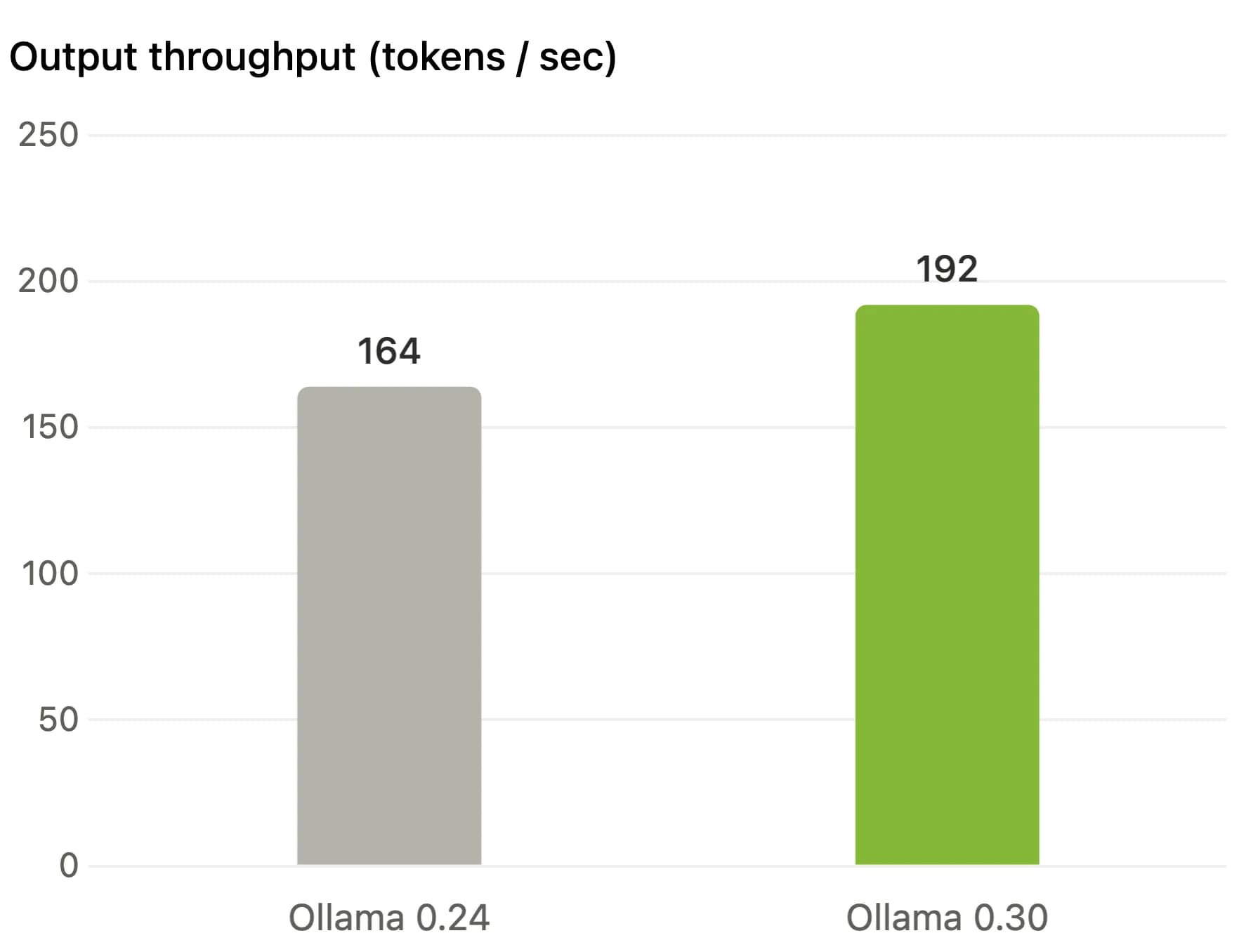
Ollama just dropped version 0.30, and it tackles the two things that annoy people most about running LLMs locally: GPU performance and model compatibility. The update claims throughput gains of up to 20% on NVIDIA hardware and extends GPU acceleration to more devices through default Vulkan support, while deepening ties with the GGUF model ecosystem. It fits into a wider push to make local AI a genuine alternative to API calls, as Ollama's $88 million bet on open-weight models shows.
Faster inference, wider reach
The big headline targets NVIDIA users. Ollama 0.30 incorporates optimizations from both the NVIDIA and llama.cpp teams, and the team quantified the results using a Gemma 4 26B model at Q4_K_M quantization on an RTX 5090. Actual gains will vary by model, hardware, and quantization, but 20% is a meaningful improvement for developers running local inference loops. That kind of hardware-specific optimization mirrors the approach Nvidia took with GR00T 1.7 VLA for robotics labs.
More important for most people: Vulkan GPU acceleration is now on by default. Before, users on AMD or Intel GPUs often had to install vendor-specific libraries or fiddle with configuration to get GPU-backed inference. Now Ollama handles that complexity, so models run on the GPU out of the box on more devices.
GGUF ecosystem expansion
Ollama 0.30 expands GGUF model compatibility to include model families like LFM and Prism, plus fine-tuned models from Unsloth. This matters for two reasons. First, users can pull GGUF files directly from Hugging Face and run them through a simple Modelfile workflow with no conversion step. That handoff from Hugging Face to local runtime just became frictionless, comparable to AWS and Hugging Face's one-click SageMaker integration. Second, it aligns Ollama more closely with the broader open-source LLM ecosystem, where GGUF has become the default quantized format for local deployment.
The workflow is straightforward: download a GGUF file (or a directory of them), create a Modelfile pointing to it, then run ollama create and ollama run. If the model supports tool calling, Ollama inherits that capability, enabling integration with coding agents like Claude Code, Hermes Agent, and OpenClaw via a single ollama launch command. Users can verify tool support with ollama show my-model. That tool-calling pipeline puts Ollama in direct competition with agent-first IDEs like Cursor 2.0's agent-first environment.
Strategic positioning
This release consolidates Ollama's bet on the GGML ecosystem, which underpins llama.cpp and the broader local AI movement. By defaulting to Vulkan and accepting GGUF files natively, the project reduces the gap between tinker-level deployment and plug-and-play. For developers building local AI tools, personal assistants, coding agents, or custom workflows, Ollama 0.30 lowers the barrier to entry without demanding a specific GPU brand. That matters in an era where GPU hopping across cloud providers carries hidden costs that local runners sidestep entirely.
The update also quietly points to a competitive dynamic: as cloud-based inference costs stay unpredictable for high-volume use, local runners like Ollama offer predictable latency and zero API costs. Faster GPU support and wider hardware compatibility only strengthen that argument. The economics of local versus cloud inference echo the same calculus that Cognition Labs uses to measure Devin's human-hour savings.
Ollama 0.30 is available now for download on macOS, Linux, and Windows.