Ollama Raises $88 Million to Push Open Models as an Alternative to Proprietary APIs
Ollama raised $88 million to grow its platform for running open-weight models locally, citing 8.9 million developers and 85% Fortune 500 usage. Investors include Benchmark, Theory Ventures, 8VC, and Y Combinator, with Docker founder Solomon Hykes advising.
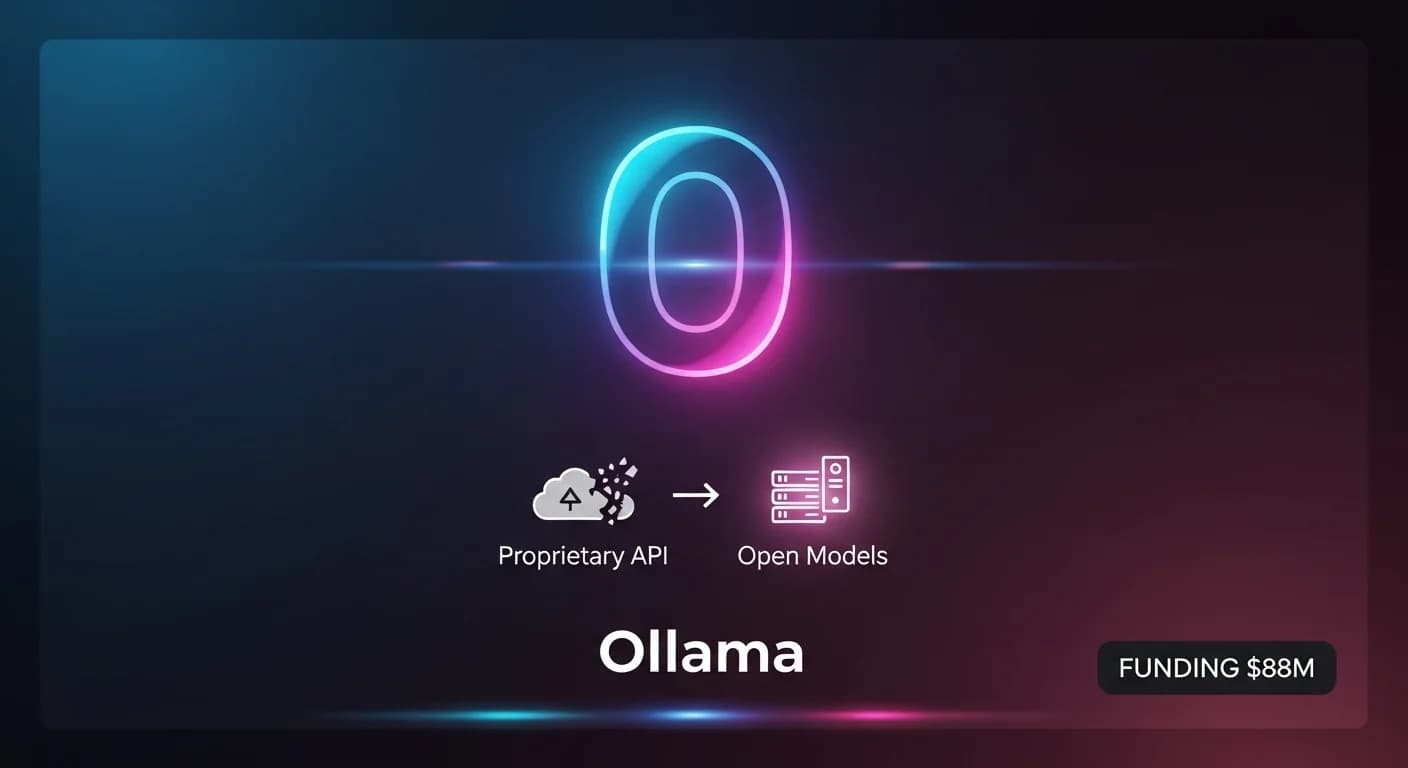
The company announced the round on its blog July 9, framing it around three principles it calls ownership, affordability, and privacy. Ollama says 8.9 million developers currently use its platform, and that 85% of Fortune 500 companies use Ollama in some capacity. Token volume through its cloud offering has more than doubled every month on average, according to the company.
The round drew backing from Benchmark, Theory Ventures, 8VC, and Y Combinator, with Docker founder Solomon Hykes and ClickHouse CEO Aaron Katz joining as advisors. Ollama's pitch leans on Docker's own history: founder-turned-advisor Hykes previously built the tool that made containers something any developer could run without special infrastructure, and Ollama is betting a similar shift is happening with open-weight models like GLM, Nemotron, DeepSeek (DeepSeek-V4 preview lands, and the open-weight math…), Kimi, and MiniMax, models that a developer can now run "as easy as running any other piece of software," in the company's words, without an API key or specialized server hardware.
The funding lands as inference infrastructure has become one of the more heavily capitalized corners of AI. Groq raised $750 million earlier this year to expand its inference chip business (Groq raises $750M as inference demand surges, partners…), and open-weight models have increasingly become the base layer developers reach for when running inference outside a major lab's own cloud, including in production settings like automated repository triage that would otherwise depend on paid API calls (How Local LLMs Like Gemma and Qwen Are Taming Open…).
Ollama did not disclose its valuation alongside the raise or specify how the funds will be allocated between engineering headcount, cloud infrastructure, and go-to-market spending.