AI Development
Vibe coding is fast. Shipping what it builds is where the real work begins.
Vibe coding accelerates prototyping and lowers the barrier for beginners, but its hidden technical debt, security risks, and lack of reasoning traceability challenge assumptions that AI-generated code is ready for production. Developers must weigh speed against control.
The idea that captured a movement
In early 2025, Andrej Karpathy, a former OpenAI and Tesla researcher, coined a term that would soon dominate developer conversations: vibe coding. His description was deceptively simple. You describe what you want in plain language, let an AI model generate the code, test it, fix mistakes iteratively, and keep your focus on the big picture. The term spread fast, touching every corner of AI-assisted development. Now, as the first wave of excitement settles, a more measured assessment emerges. Karpathy's coinage still fits prototype work and fast exploration. It rarely produces code you could ship to production without plenty of human cleanup. The hidden tax on vibe-coded projects that shows up…
That tension, between speed and reliability, sits at the center of this analysis.
What vibe coding actually is
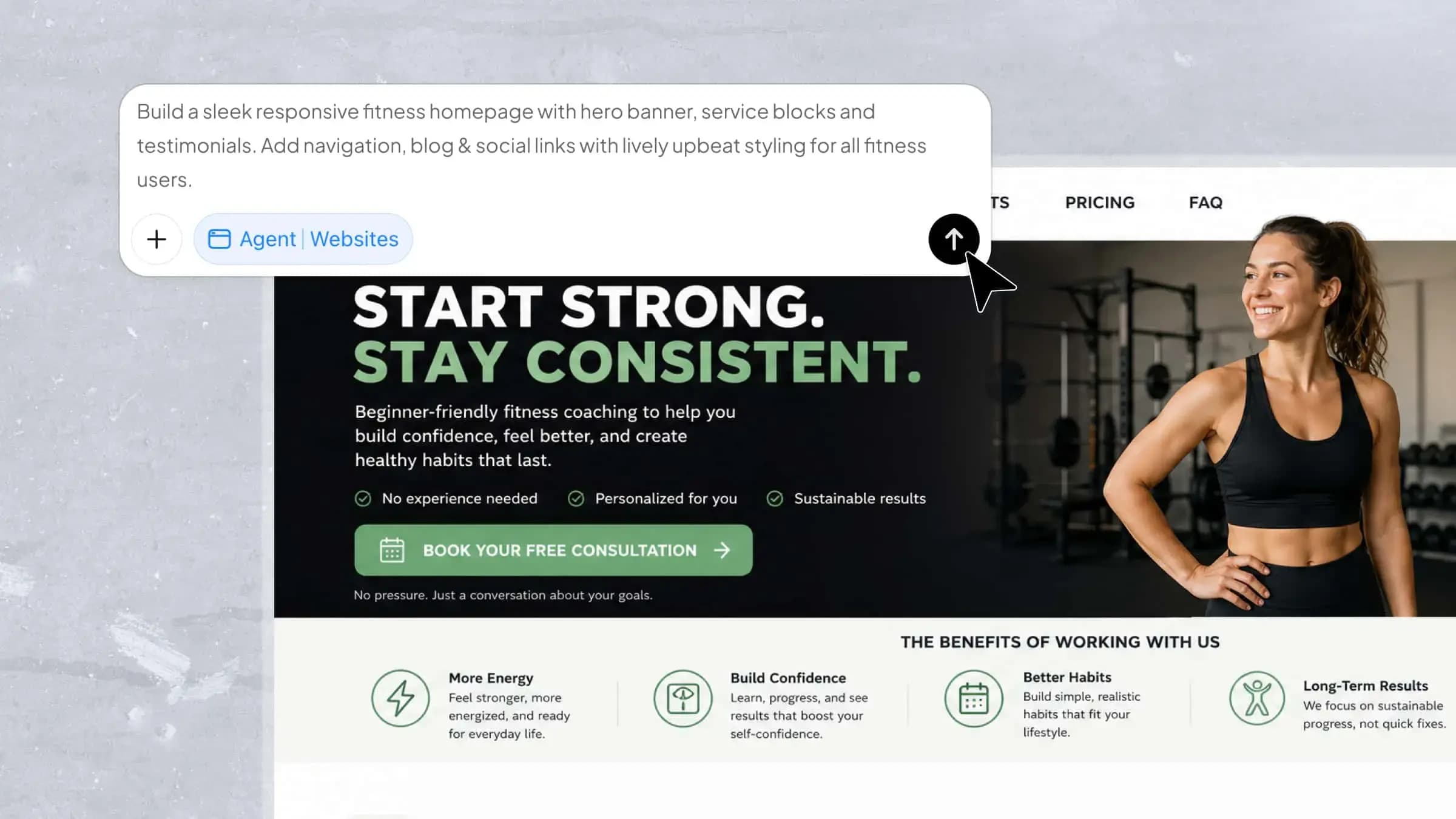
The core idea replaces the old write-compile-debug loop with a natural language interface, an LLM-driven engine, and an automated testing loop. The developer becomes a high-level conductor, sending instructions to an AI that generates code and runs tests on its own. Tools like Kimi Websites turn a single prompt into a polished web app in minutes. Kimi Code works from the terminal to modify codebases, fix bugs, or refactor modules. 600 files, one command: what moonshot.ai's refactor…
The workflow stays iterative: describe the problem, let the AI produce a first draft, review and refine through chat or direct edits, then publish. Karpathy's original framing emphasized reducing friction between an idea and its executable form. That vision resonated in a developer community already comfortable with AI assistance.
But the method hides a big assumption: that the AI's code is reliable enough to build on. That assumption is where things get complicated.
The real-world upside: speed, access, creativity
Developer reports consistently highlight the same benefits: time savings of one to two hours per week, faster prototyping cycles, and the ability for non-programmers to build functional tools. A product manager can spin up a portfolio website with an embedded chatbot without touching HTML. An educational technologist can build a plywood cutting visualizer from a single sentence. A growth marketer can create a fun crypto profit simulator in an afternoon.
These examples are not trivial. They show that vibe coding lowers the barrier to entry for creating small, focused tools that solve real problems. It democratizes software creation by reducing the need to learn syntax. For startups and individual creators, that acceleration translates into faster iteration and more experimentation. Cognition's new coding agent scores near frontier…
As one developer put it in forums: I no longer have to choose between building nine prototypes in a week or one in a month. Vibe coding gives me the nine.
The hidden cost: technical debt and security
Yet for every success story, there is a counter-narrative of hidden issues. The most persistent criticism is technical debt. AI-generated code prioritizes functionality over efficiency. It tends to favor verbose patterns, overlooks edge cases, and sometimes produces brittle structures that are hard to maintain. Developers who skip thorough review may find themselves months later wrestling with performance bottlenecks or security holes they never anticipated. The verification horizon: why verifying coding agents…
Security is the sharper edge. Analyses from security firms and open-source audits have identified common vulnerabilities in AI-generated code: weak authentication flows, exposed API keys, unsafe data handling, and missing input validation. The risk grows when users trust the AI without understanding the code it produces. A beginner who relies on the output blindly may deploy an application that leaks user data or exposes internal configurations.
Security researcher Jake Williams noted in a 2025 analysis: The code looks clean at a glance. But look closer and you will find routes without rate limiting, passwords stored in plaintext, and queries vulnerable to injection. The LLM does not know it is doing something dangerous. It just knows the code compiles.
Lack of reasoning traceability
Another less discussed but equally significant drawback is reasoning traceability. When a human writes code, they can explain why they chose a specific algorithm or library. Vibe coding's outputs come without any rationale. The AI may pick an obscure dependency or implement a pattern that conflicts with the rest of the codebase, and the developer has no way to ask why. Your AI agent passed the test by accident. Now there's…
This opacity does not matter in a throwaway prototype. But in a project that must be maintained for months or years, it creates friction. Future developers, or even the original author, may struggle to understand the code's intent.
As one team lead for an early-stage startup put it: We vibe-coded our first MVP in two weeks. We spent the next three months untangling the AI's choices. It was still faster than writing from scratch, but the debt was real.
Vibe coding vs. vibe debugging
A useful distinction emerging from the community is the separation between vibe coding and vibe debugging. The former is about generating new code quickly. The latter is about systematically finding and fixing problems in existing code. Debugging demands a different mindset: slower, more methodical, and more skeptical of the AI's output. Developers who conflate the two often end up with code that works but is fragile.
The implication is clear. Vibe coding is a tool for exploration, not a replacement for engineering rigor. The best teams use it to explore the design space rapidly, then apply traditional review and testing to harden the result.
Will vibe coding replace programmers?
No. The question itself reflects a misunderstanding of the method. Vibe coding replaces the typing of boilerplate code, not the design of architectures, the management of state, the negotiation of trade-offs, or the decision-making that defines software engineering. A developer experience survey in early 2026 found that projects relying entirely on AI-generated code without human oversight had a significantly higher incidence of runtime failures and security incidents than those that used AI as a co-pilot rather than a driver. Microsoft's bet on small models for agentic AI is about…
The future of vibe coding is likely as a layer on top of existing skills. It lowers the cost of experimentation and accelerates the tedious parts, but it always requires human judgment for the hard parts. That is not a revolution. It is an evolution of the IDE, not of the engineer.
Conclusion
Vibe coding works, for prototypes, small tools, and rapid exploration. It saves time, lowers barriers, and encourages creativity. But its output is not production-ready without human review, security auditing, and optimization. The gap between prototype and production remains human. Recognizing that gap is what separates a developer who uses the tool wisely from one who mistakes speed for quality.