Gaming
Microsoft's Xbox cuts aren't belt-tightening, they're a down payment on an exit
Microsoft's drastic cuts to its Xbox division signal more than cost-cutting, they may be the first steps toward selling the gaming business. With few willing buyers for the whole conglomerate, a piecemeal sale of studios and IPs is the more likely path.
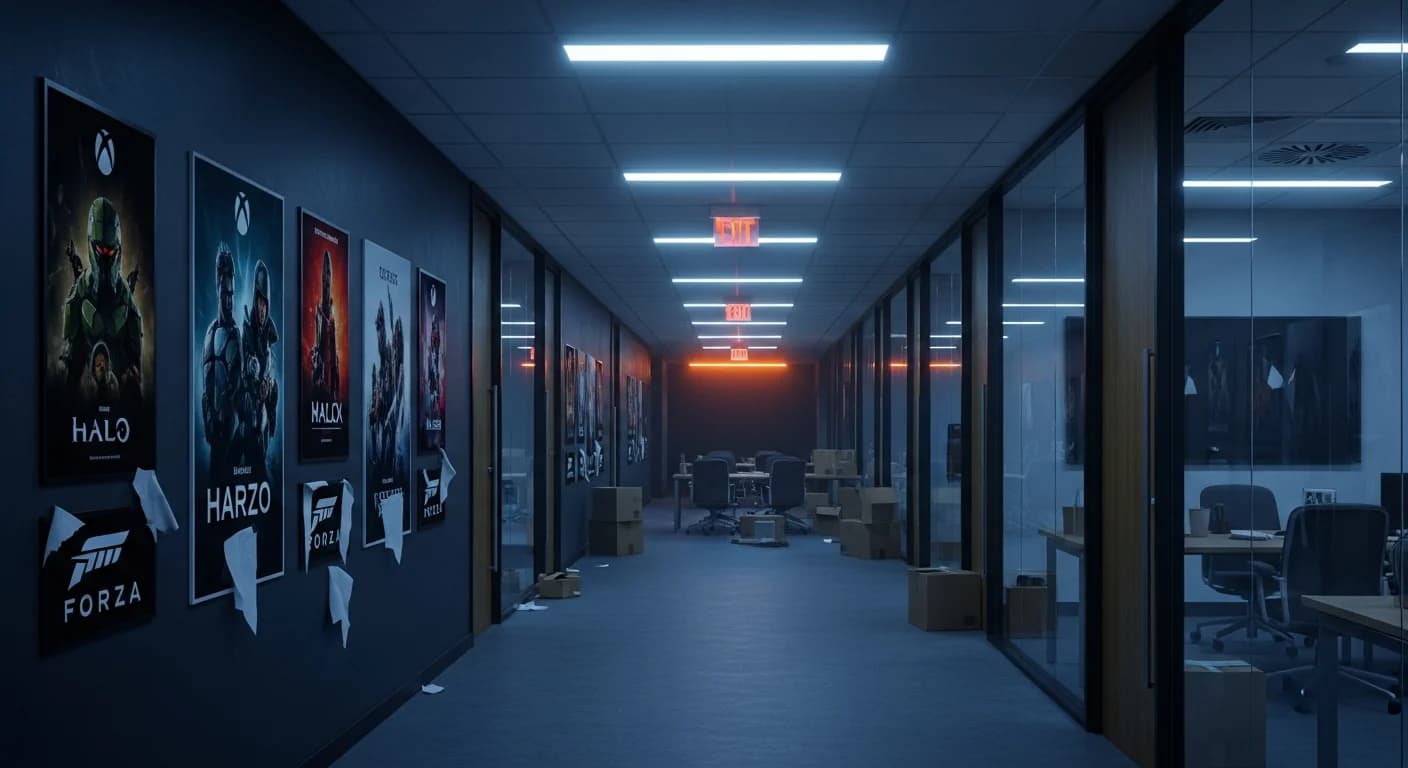
When Microsoft CEO Asha Sharma told Fortune that Xbox is "not healthy" and that the company "simply spread ourselves too thin," she was not describing a temporary dip. The layoffs of 3,200 workers, the loss of four studios, and the explicit focus on only the biggest franchises paint a picture of a business being trimmed for a sale, not a turnaround. Microsoft's bet on small models for agentic AI is about…
New York University professor Joost van Dreunen, speaking to The Verge, put it plainly: "A wholesale divestiture of Xbox remains on the table, and it looks likelier given Xbox's struggles with rising hardware costs and Microsoft's focus on AI and infrastructure." The logic is coldly financial: every dollar spent on consoles and studios is a dollar not spent on the datacenters powering Azure and OpenAI. GPT-5.6 just made every dollar in AI count harder
The buyer problem
But if Microsoft does want to exit, the market may not cooperate. A full sale of Xbox, which includes hardware, a publisher, and over 20 studios, would likely cost north of $23 billion in annual revenue alone. Van Dreunen calls the pool of potential buyers "very thin." Tech giants like Netflix, Amazon, and Tencent have all pulled back from major gaming M&A. Netflix let go of its AAA studio; Tencent is reportedly trying to unwind game investments in Japan; the Saudi-backed Savvy Games Group is also scaling down.
Yoshio Osaki, president of IDG Intelligence, agrees that a full sale is unlikely, but not impossible. "I think all options are on the table, considering the drastic measures already put in place," he told The Verge. The more plausible scenario, both analysts say, is a piecemeal breakup. Google DeepMind's Gemma 4 turns 26 billion parameters…
What's for sale
Microsoft has already shown it is willing to let studios go. Compulsion Games and Double Fine Productions went independent; Ninja Theory and Undead Labs were sold to unnamed buyers. The remaining portfolio is being concentrated on a small set of proven IPs: Halo, Call of Duty, Warcraft, Minecraft, and Candy Crush. Sharma is elevating Mojang and King to report directly to her, calling them "platforms" and the largest by monthly active players.
A studio like Mojang, with Minecraft's near-billion-dollar annual revenue and cross-platform ubiquity, would fetch a premium from any media company. Activision Blizzard's Call of Duty factory, Infinity Ward, Treyarch, Raven, is a live-service cash machine. The hardware business, by contrast, is a liability: Xbox Series X/S sales have stagnated, and the next-generation Project Helix will require even more R&D spending. Anthropic and DXC Technology Launch Global Alliance to…
The AI trade-off
The timing is no coincidence. Microsoft is in a capital-intensive race with Google, Amazon, and Meta to build out AI infrastructure. The company has committed billions to OpenAI and is building out its own Azure AI supercomputers. Sharma has not even been in her role six months, and the cuts came fast. "As Microsoft looks to free up cash for its AI build-out," van Dreunen notes, "scaling Xbox back, or selling off parts of it, starts to look worth it." Parallel agents aren't about speed. They're about…
Opinions diverge on the timeline. Osaki expects a clearer picture by year-end; van Dreunen thinks within 24 months. What is certain is that the cuts announced this week are not the end of the story. Xbox's future is being reshaped by forces well beyond the living room, and the controller may soon be held by someone else entirely.