Artificial Intelligence
Alibaba's Qoder shows developers what the AI is thinking, not just the code it wrote
Alibaba Cloud's Qoder coding agent bets that developers want visibility over magic. Two modes, automatic model routing, and a transparency layer aim to solve complexity instead of hiding it.
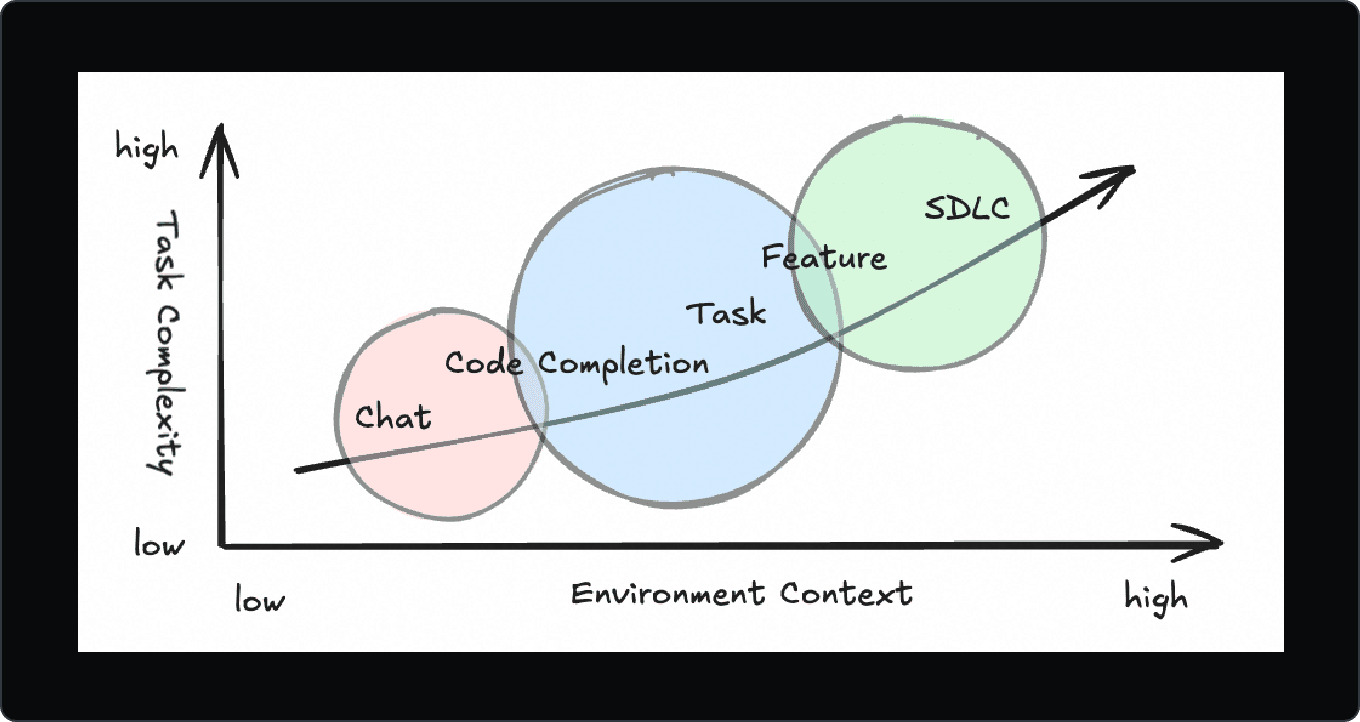
The loudest conversations around AI-assisted coding today are dominated by demos of projects built from a single prompt. These "Wow Projects" flood social media, each claiming to have generated an entire application in minutes. Alibaba Cloud is betting that real software development needs something less glamorous but far more durable: visibility.The subtle trap waiting for AI agents in production
With the launch of Qoder, a new AI coding agent built on the company's Qwen model series, Alibaba Cloud is making a bet that the next frontier of AI-assisted development is raw autonomy. It is collaboration grounded in transparency. The tool, available as a free public preview, aims to solve problems that Fred Brooks identified decades ago and that the AI era has only amplified.Alibaba's Qwen is building a model for every AI job,…
The visibility imperative
Qoder's central design principle is deceptively simple: make the invisible visible. Unlike black-box assistants that suggest code without context, Qoder exposes a project's architecture, design decisions, and technical debt. It functions less as a freelance coder and more as an expert curator who knows everything about the codebase.
This visibility serves dual purposes. First, it helps developers understand the rationale behind AI-generated suggestions. Why a particular design pattern was chosen. Where technical debt accumulates. Which architectural decisions conflict. Second, it builds trust. The tool introduces a state panel, a decision log, and plan visualization, all designed so developers can see the AI's plan, progress, and decisions at any time.
"In AI coding, visibility is not optional. It is essential for effective collaboration." Qoder design introduction
This approach directly addresses a common developer complaint about AI coding tools: the feeling of losing control. When AI works silently in the background, producing code without explanation, even correct outputs can erode developer confidence. Qoder's transparency layer aims to reverse that dynamic.The hidden tax on vibe-coded projects that shows up…
Enhanced Context Engineering
Alibaba Cloud is also introducing what it calls Enhanced Context Engineering, a methodology that goes beyond simple prompt engineering. Rather than feeding the model isolated code snippets, Qoder enriches input context with project structure, dependency graphs, business logic inheritance, and cross-file relationships.
In practice, this means the tool does not just autocomplete the current file. It understands how changes ripple across the entire codebase. Alibaba Cloud positions this as "intelligent co-development" rather than code completion, a distinction that matters for teams maintaining large, long-running projects.Microsoft's bet on small models for agentic AI is about…
Two modes for two realities
Qoder introduces a structural innovation: two distinct collaboration modes mapped to different development scenarios.
- Chat Agent Mode, a conversational, iteration-based approach suitable for short tasks. Developers supervise the workflow in real time, coding through dialogue.
- Quest Mode, a spec-first paradigm designed for complex, long-running tasks. Developers write a detailed specification, a "Spec," describing the tech stack, architecture, and goals. The AI agent executes autonomously, and developers check results.
The distinction is more than cosmetic. Chat Agent Mode mirrors existing AI coding workflows, iterative prompting and heavy supervision. Quest Mode flips the paradigm: the developer's role shifts from executor to intent clarifier. Alibaba Cloud positions the Spec not as a task description but as a thinking tool and communication medium. A project compass that becomes part of the team's knowledge base.
"A Spec is more than a task description. It is a thinking tool and a communication medium. It aligns human and AI goals." Qoder specification philosophy
Model routing as infrastructure, not user choice
One of the more quietly disruptive elements of Qoder is its approach to model selection. Rather than asking developers to study evaluation metrics and pick the best model for a given task, Qoder automatically routes tasks based on complexity and context.
This decision reflects a broader industry trend: as the number of available models explodes, the burden of selection shifts from users to platforms. Alibaba Cloud is explicit in its rationale: "Developers need solutions, not model comparisons."
The approach has trade-offs. It reduces user overhead and cognitive load, but it also surrenders control. A tension that Qoder's visibility-first design tries to resolve on other fronts.Cursor's team marketplaces get MCP servers and…
Natural language as the entry point
Qoder lowers the barrier to entry by accepting natural language descriptions. A developer can say, "Create a Spring Boot application for uploading, previewing, and downloading photos," and Qoder generates the project scaffold and core business logic. For more complex needs, the Quest Mode flow lets users first generate a Spec that describes the tech stack and architecture before any code is written.
The tool also features Repo Wiki, which builds a background index of the existing codebase and imports it into memory. When a task begins, context is already prepared. This eliminates the manual file-selection step that plagues many AI coding assistants.
Competitive context
Alibaba Cloud enters a crowded market. GitHub Copilot, Cursor, and Replit have already established strong positions in AI-assisted coding, and each has taken a different approach to the autonomy problem. Copilot remains primarily a suggestion engine. Cursor pushes toward agent-like workflows. Replit has embraced full autonomy on small projects.Cognition's new coding agent scores near frontier…
Qoder's differentiation lies in its granularity of transparency and its two-mode architecture. By offering both a familiar iterative mode and the more ambitious Quest Mode, Alibaba Cloud is trying to serve two developer personas. Those who want to stay in control of every line, and those willing to delegate complex, bounded tasks to an autonomous agent.
Whether this bifurcated approach proves superior to a continuum of autonomy levels remains to be seen. But the emphasis on process visibility rather than output spectacle marks a meaningful departure from the dominant marketing narrative in the AI coding space.
The invisible crisis
Alibaba Cloud's framing taps into a genuine tension in the industry. The same AI capabilities that produce impressive single-prompt demos also introduce new forms of complexity. Hidden context. Opaque outputs. Loss of developer intuition. Brooks's "essential difficulties" of software development, complexity, conformity, and changeability, do not disappear with AI assistance. In some cases, they grow.The 17 questions about AI that nobody is asking
Qoder's bet is that developers will gravitate toward tools that acknowledge this reality rather than papering it over. The tool's availability as a free preview means the market will deliver its verdict quickly.