Editorial opinion
Why generating an article on command misses the point of journalism
A blank prompt to "generate an article" reveals a fundamental misunderstanding of journalism. The hardest work is not writing, but deciding what is worth writing about, a distinction that machines still cannot make.
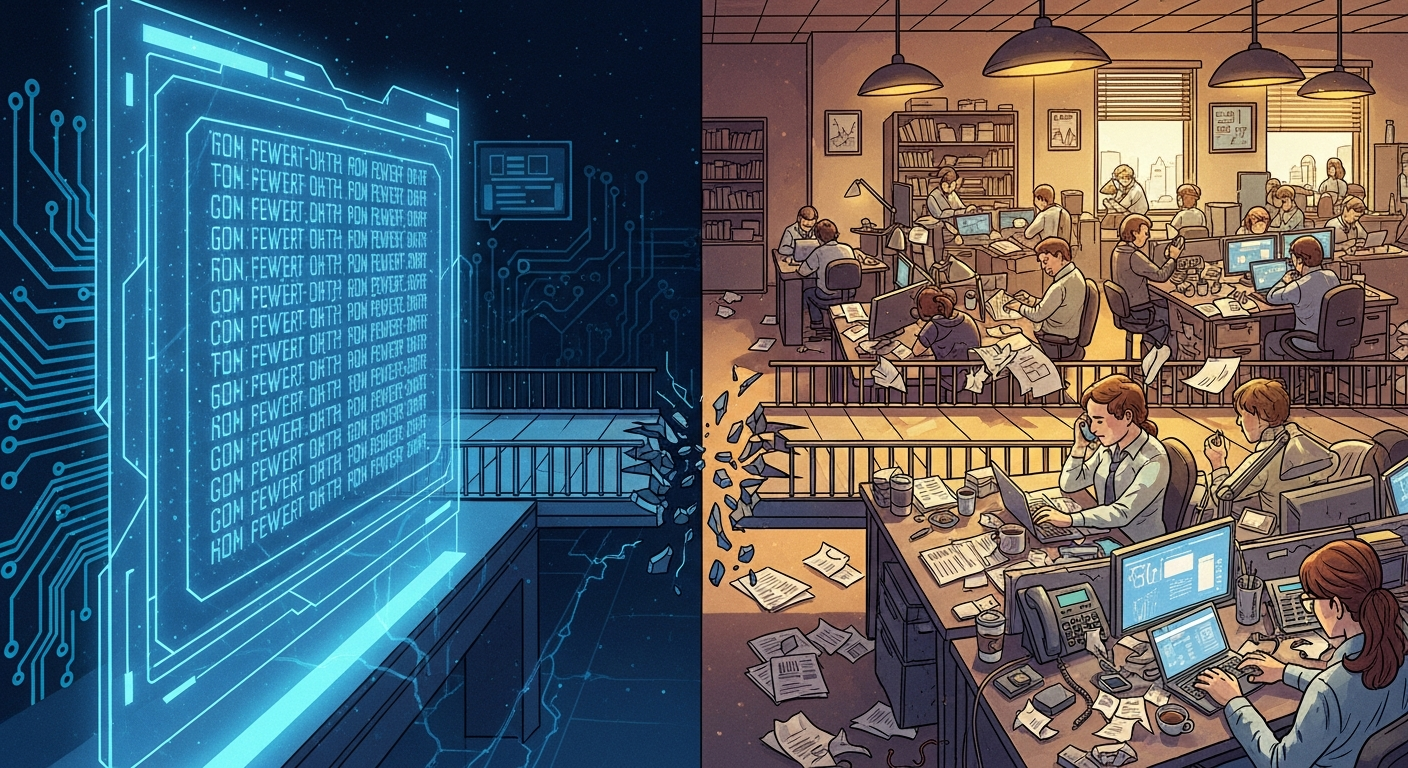
The instruction was simple: "Generate an article." No angle, no event, no data. Just the command to produce. It is the kind of request that exposes a widespread illusion about what journalism, and increasingly AI-assisted journalism, actually does.
Anyone who has worked in a newsroom knows that writing is rarely the bottleneck. The hard part comes before a single sentence is typed: identifying the story that matters, verifying the facts, choosing the frame, rejecting the noise. A prompt to "generate" skips every one of those steps and assumes the act of composition is the whole job. It is like asking a chef to "cook something" without specifying ingredients, occasion, or diet.
In the context of the AI tools now embedded in many editorial workflows, the temptation to treat large language models as content vending machines is understandable. They are fast. They are fluent. They never complain about a deadline. But their fluency is precisely the danger. A model that can produce a plausible 800-word article on any topic, from any prompt, creates the illusion that the hard work of journalism has been automated away. It has not. What has been automated is the easy part, the arrangement of words into grammatical order. What remains stubbornly human is the judgment: the choice to write about one thing and not another.
Consider the source material for this very exercise: a single line with no substance. The appropriate journalistic response is not to fabricate an article from thin air, but to refuse, or to reframe the request entirely. That is what this piece attempts. It is not a news article because there is no news. It is not an analysis because there is nothing to analyze. It is a commentary, a brief meditation on what the request itself reveals about the state of automated content production.
The irony is that the prompt succeeded in generating an article, just not the one it asked for. And that is perhaps the most honest outcome. Journalism, even machine-assisted journalism, should not be in the business of filling space. It should be in the business of making choices. Until a model can decide what matters, the most important decision in any article will remain the one that happens before the first keystroke.