Generative AI
The generative AI content factory is erasing the value of your byline
Synthetic content tools are churning out vast quantities of articles, images, and video, threatening to undermine trust in digital authorship and the economic value of human-created work. The efficiency gain comes at a steep cost: blurred lines between real and generated.
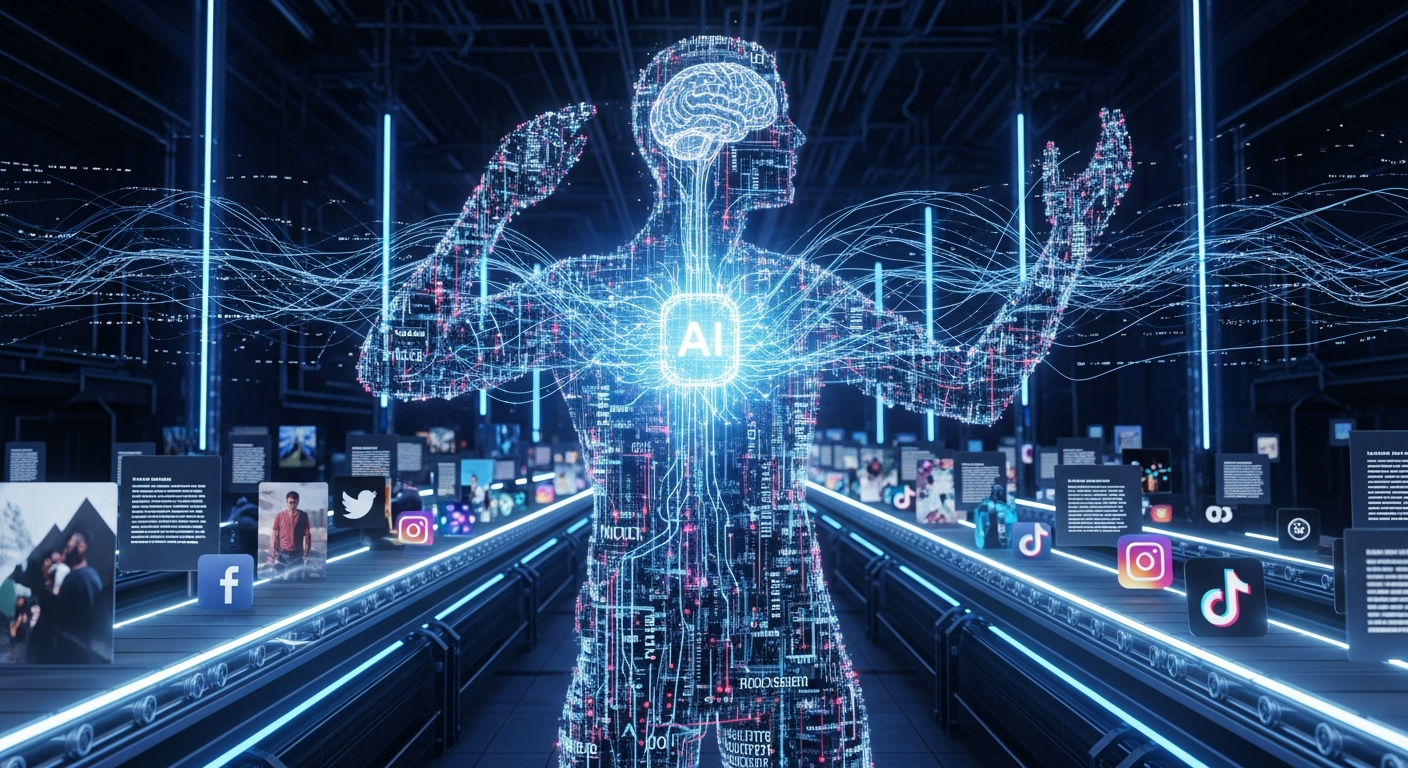
Context: A quiet explosion
In the past year, generative AI models, from text-focused LLMs to diffusion-based image generators and voice cloning tools, have moved from novelty to industrial infrastructure. Companies like OpenAI, Anthropic, Meta, and numerous startups now offer APIs and consumer apps that produce plausible text, photorealistic images, and convincing audio in seconds. The output volume is staggering: millions of articles, social media posts, product descriptions, and ad creatives per day, often indistinguishable from human work.
The economic logic is irresistible for businesses. A marketing team that once needed a copywriter, a graphic designer, and a voice actor can now replace the entire workflow with a single generative pipeline. The cost per unit of content has dropped by orders of magnitude. But the societal bargain is rarely acknowledged publicly.
The identity problem
At the heart of the shift lies an identity crisis. If a machine can produce a news article that reads as competently as a journalist's, what is the value of the journalist's byline? If an AI can generate a photorealistic portrait of a person who never existed, what does a photograph attest to? The digital artifact, once the primary carrier of human authorship, loses its evidential weight.
This erosion has concrete consequences. Disinformation campaigns, already a global concern, gain a cheaper and more scalable tool. Deepfakes no longer require Hollywood budgets. Synthetic reviews flood e-commerce platforms, drowning out authentic feedback. The trust fabric of the internet, already frayed, faces an accelerated unravelling.
Platforms respond too slowly
Technology platforms have begun to respond. Meta and OpenAI have introduced provenance metadata and watermarks for AI-generated content. The Coalition for Content Provenance and Authenticity (C2PA), backed by Adobe, Microsoft, and others, offers a technical standard for tracing content origins. Yet adoption is patchy, and detection remains an arms race with generation. A watermark is trivial to strip; metadata can be removed by a screenshot.
Startups like Truepic and Sensity offer detection services, but they struggle against the latest models. The gap between generation and detection is widening, not closing.
The economic ripple
The freelance economy, writers, designers, voice actors, editors, is already contracting. Platforms like Upwork report declining rates for content creation gigs. Stock image agencies like Shutterstock and Getty Images have seen their revenue models disrupted by algorithmically generated alternatives. A 2023 study by Goldman Sachs estimated that 300 million jobs worldwide could be affected by generative AI, with content creation among the most exposed.
But the loss is not just economic. Human-made content carries intangible value: perspective, lived experience, ethical judgment, emotional nuance. A synthetic news article can report facts; it cannot feel outrage or compassion. The flattening of voice to algorithm may produce efficiency but hollows out culture.
Regulatory catch-up
Governments are only beginning to grapple with the implications. The European Union's AI Act, passed in March 2024, requires disclosure of AI-generated content. California's proposed AI Transparency Act mandates similar labeling. But enforcement is weak, and the rules apply unevenly across jurisdictions. China's generative AI regulations, among the strictest, require a truthfulness principle, but enforcement data is scarce. The global regulatory patchwork leaves loopholes large enough to drive an automated content plant through.
What comes next
The trajectory points toward a bifurcated digital ecosystem: a premium tier of verified human-generated content (credentialed, signed, expensive) and a vast, cheap ocean of synthetic content (fast, abundant, trustless). The division will map onto economic inequality, those who can afford authenticity will pay for it; others will consume what the machines produce, often unknowingly.
Tools that help people prove their humanness, decentralized identity systems, cryptographic signatures for creative work, human-only verification badges, may become as essential as passwords. Startups like BrightID and Idena are experimenting with proof-of-personhood mechanisms, but they remain niche.
The deeper question is whether society will decide that human authorship matters enough to protect it. The technology is not slowing down. The answer cannot wait.