AI governance
China's tech giants just deleted millions of AI relationships
ByteDance, Tencent, and Alibaba are simultaneously shutting down AI companion features that allowed millions of users to form emotional bonds with customizable virtual characters. The move, widely seen as a response to China's new AI content regulations taking effect in April 2026, has triggered user outrage and complaints about losing irreplaceable emotional investments.
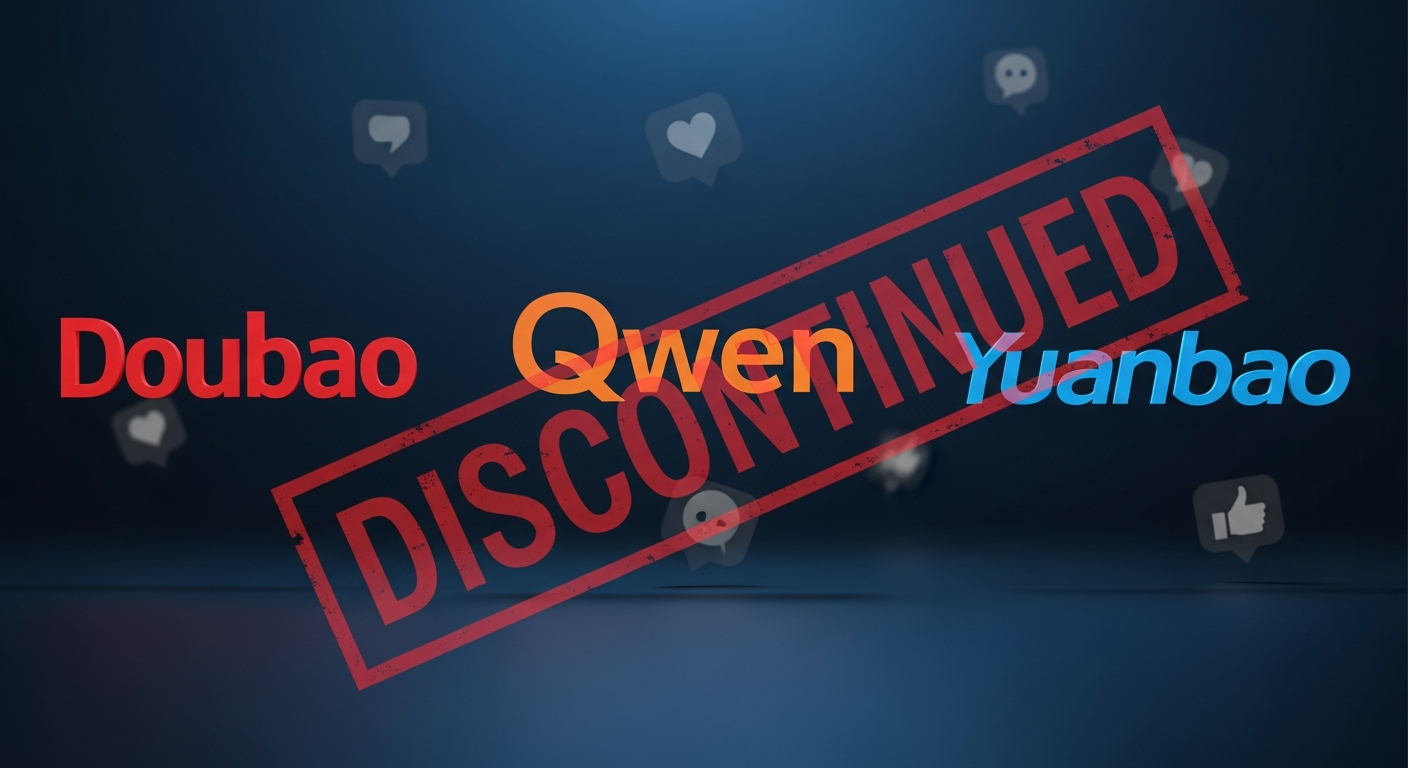
In a coordinated move that has stunned China's consumer AI market, ByteDance, Tencent, and Alibaba are all killing the AI companion features that turned their chatbot platforms into emotional outlets for millions of users.
Doubao, ByteDance's flagship AI assistant with 368 million monthly active users, had amassed over 8 million user-created AI characters by 2024. 26 million monthly active users were chatting with these virtual personalities. Users had uploaded voices of deceased loved ones, invented fitness coaches, and built romantic partners, accumulating years of daily interactions and deep emotional attachments.
Shortly after Doubao's announcement, Alibaba's Qwen assistant followed suit. Tencent's Yuanbao had already closed its user-created character entry point earlier this year. The synchronized timing across China's three dominant tech players has fueled speculation that regulatory pressure, not individual product decisions, lies behind the abrupt shutdowns.
The primary catalyst appears to be China's new AI content regulations, scheduled to take effect in April 2026. The rules impose strict content moderation requirements on all generative AI platforms, making the wild west of user-created AI characters, where interactions are unpredictable and often emotionally charged, a growing compliance liability.
Users have responded with outrage, filing formal complaints and demanding tools to export the accumulated memories and character data their AI companions stored. For many, those conversations represent thousands of hours of emotional investment spanning multiple years, relationships they describe as irreplaceable. The loss is not merely a feature sunset but a digital eviction from a home they helped build.
Industry analysts argue the platforms are making a calculated strategic trade-off. The AI companion features, while enormously popular, represent a growing regulatory liability under China's evolving AI governance framework. The engineering overhead required to keep user-generated AI interactions compliant at scale, especially when those interactions involve grief, romance, or therapeutic conversations, may simply outweigh the strategic value for companies increasingly pivoting toward productivity and enterprise AI use cases.
“These are not simple chatbots anymore; they are reservoirs of highly personal, sometimes legally sensitive data,” said a Beijing-based tech policy analyst who spoke on condition of anonymity. “Under the new rules, every interaction must be auditable, filterable, and non-problematic. That is nearly impossible for open-ended companion characters at this scale.”
The shutdown represents a notable course correction for China's consumer AI market. After two years of aggressive companion feature development, the three tech giants are now prioritizing utility-focused AI assistants over entertainment and emotional engagement features, a strategic pivot that could redefine how hundreds of millions of Chinese consumers interact with AI on a daily basis.
Whether the affected users, many of whom built entire digital relationships inside these walled gardens, will migrate to alternative platforms or abandon AI companionship altogether remains an open question. For now, the silence from Beijing and the coordinated silence from the three companies suggest the regulatory writing was on the wall long before users saw it.
No official statements from ByteDance, Tencent, or Alibaba have explained the timing or cited any specific regulatory trigger. The shutdowns proceed regardless.